Training after joint replacement or back surgery
The Right Fit Personal Training is a personal training business with four studios in Auckland: Epsom, Ponsonby, Takapuna and Remuera. Over 200 of our members came to us after a new hip or knee, and we have worked with people coming back from shoulder replacements and back surgery as well.
The surgery is the part everyone plans for. What catches people out is the bit afterwards. You get your weeks of physiotherapy, you hit the goals, you are discharged, and then you are on your own with a repaired body part and a noticeable weakness you are not sure what to do about.
That gap is where most of the long term result is won or lost.
Where we fit
We are not a rehabilitation provider and we do not replace your surgeon or your physiotherapist. We pick up where they leave off.
Your physiotherapist gets you moving and safe, and their job ends when you are discharged. Ours starts there. Rebuilding the strength around the repair, getting you back to the things you stopped doing, and keeping you there.
We will not start loading you until you have been discharged from physiotherapy or your surgeon or physiotherapist has cleared you for progressive strength training. If you are not sure where you sit, bring it to your first consultation and we will work it out together.
Why the strength does not come back on its own
Moving normally again is not the same as being strong again. The muscle you lost before surgery while you were avoiding a painful joint or a sore back, plus the muscle you lost during the operation and the weeks after it, does not return simply because the pain has gone.
In one study of standard rehabilitation after a knee replacement, patients had lost 67 per cent of their quadriceps strength three and a half weeks after surgery. Deficits on the operated side commonly persist for a year or more, and for some people they never fully close without deliberate training.
That is not a reason to be discouraged. It is the single most trainable thing in the whole picture.
After a hip or knee replacement
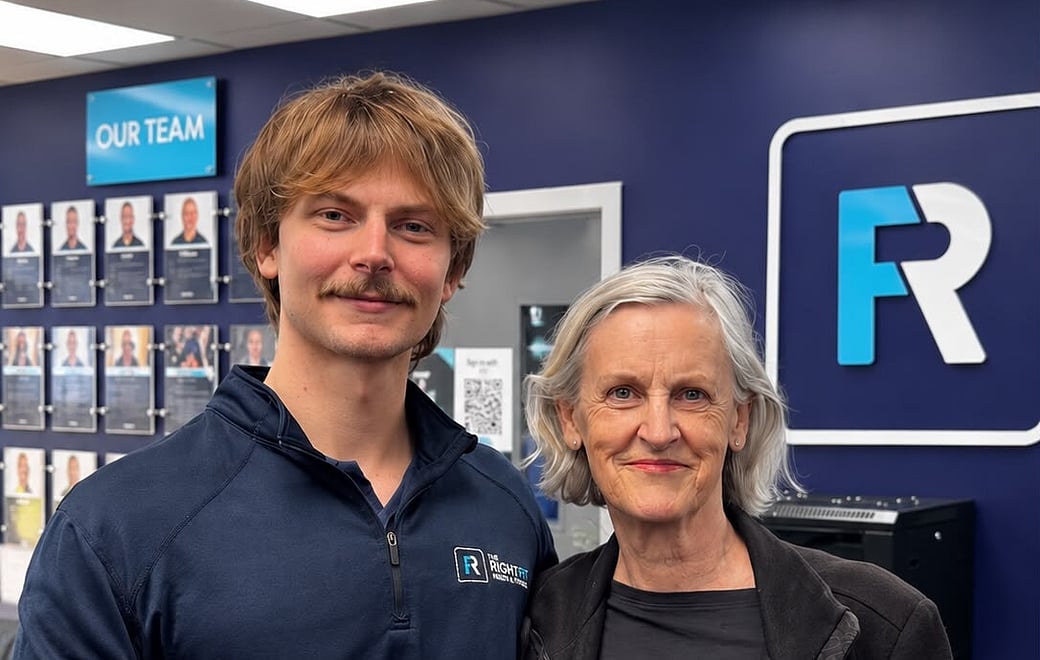
This is the largest group we see. Petterson and colleagues, writing in Arthritis and Rheumatism in 2009, followed 200 patients after total knee replacement. Those who did progressive strength training two to three times a week for six weeks improved steadily out to twelve months. A comparison group who had standard care instead were 24 per cent slower on a timed up and go test, 44 per cent slower climbing stairs, and covered 15 per cent less ground in a six minute walk.
The picture is similar at the hip. In a randomised trial by Winther and colleagues, patients who did ten weeks of heavy resistance training were 25 to 50 per cent stronger in leg press and hip abduction than the control group at three and six months. Husby and colleagues found that patients who began maximal strength training about a week after surgery still produced force 74 per cent faster than controls a year later.
Maureen came to us after a hip replacement and has since been completely cleared by her surgeon. In her words:
"After having my hip replaced, it was so important that I had a fitness regime that suited me, and a personal trainer to ensure that I met my fitness goals and kept me safe doing it."
Trish had a knee replacement and a run of health scares, and kept showing up through all of it, adjusting her training and working on what she could do. She is moving well again and still building. Raewyn came at it from the other end: her training had become painful in the lead up to hip surgery, so rather than stopping she kept working to hold on to the strength she had. Six weeks after the operation she was back training pain free.
Book your free consultation
After a shoulder replacement
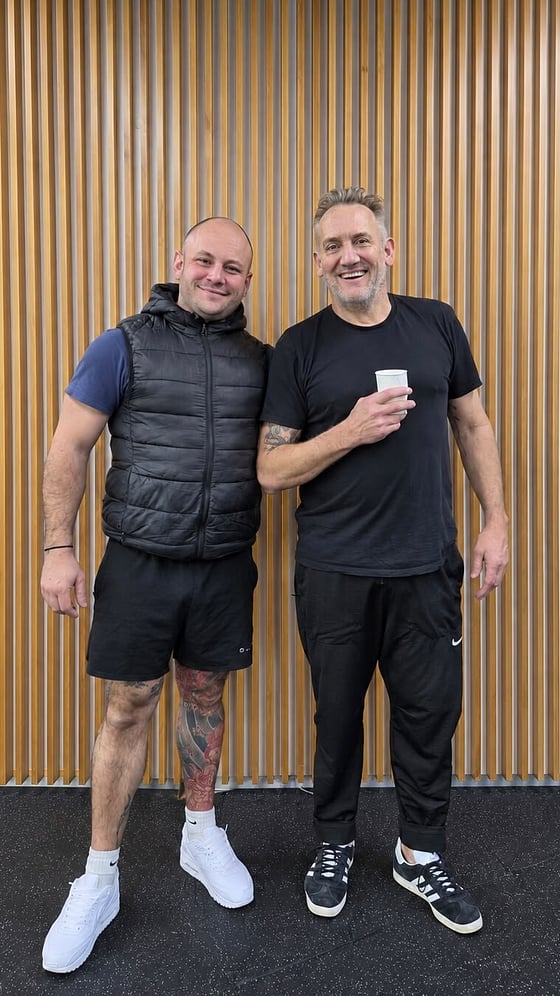
Shoulders follow a slower and more protective timeline than hips and knees, and the standard protocols reflect that. In the controlled trials reviewed by Sachinis and colleagues in Shoulder and Elbow in 2024, resistance training was introduced at around twelve weeks after a reverse shoulder replacement, and starting movement earlier rather than later appeared safe without compromising the result.
By the time most people reach us, that window has long passed and the formal programme has finished. What is usually missing is not range of movement but strength, and the confidence to use the arm.
Phil came to us about a year after a full reverse shoulder replacement. His goal was simple: strengthen the area around the shoulder and work out what he could safely do with the new joint. A year on he is stronger, more flexible and fitter, with strength and stability around the joint and through the rest of his body, and a much clearer sense of what the shoulder will and will not take. His advice to anyone in the same position was to go and have that conversation with their trainer. Of his own, he said:
"He has exhibited an incredible understanding of my musculoskeletal system. I have got nothing but good things to say about the experience."
Book your free consultation
After back surgery
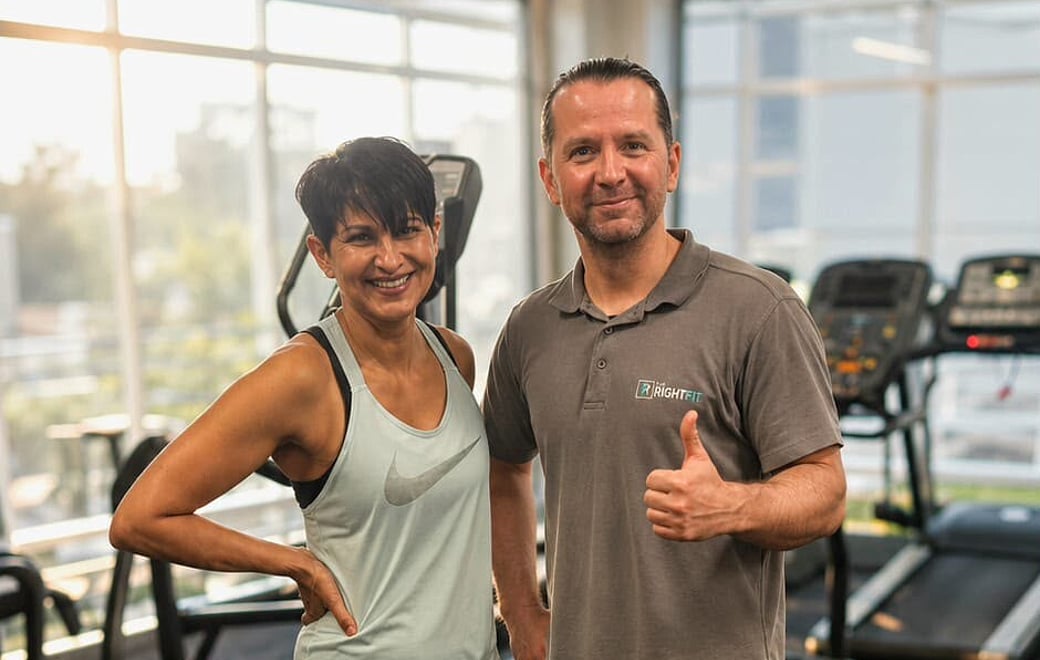
Back surgery carries more fear than any other operation on this page, and the instinct afterwards is to protect the area and do less. The evidence does not support that instinct.
Brotis and colleagues, writing in Brain and Spine in 2025, pulled together 55 randomised controlled trials covering 4,311 patients who had surgery for a lumbar disc herniation. Physical therapy after surgery improved pain, function and quality of life. Programmes built around the endurance, flexibility and strength of the back muscles were generally effective. Putting limits on physical activity, on the other hand, produced no substantial advantage.
Read that last point twice if you have been told to be careful with your back. Careful is not the same as inactive, and the research is clear that doing less is not the protective choice it feels like.
We should be straight with you about one thing. Most of our back stories are people who came to us with longstanding back pain rather than after an operation. Jaishri joined worried her back would limit what she could do, and has since built enough strength through it that it no longer does. Lorna arrived with chronic lower back pain and a constant fear of re-injury, and within several months of a targeted strength programme the pain resolved and then went altogether. The principle is the same either way: the back gets better when you build it, not when you guard it.
Book your free consultation
What your first month looks like
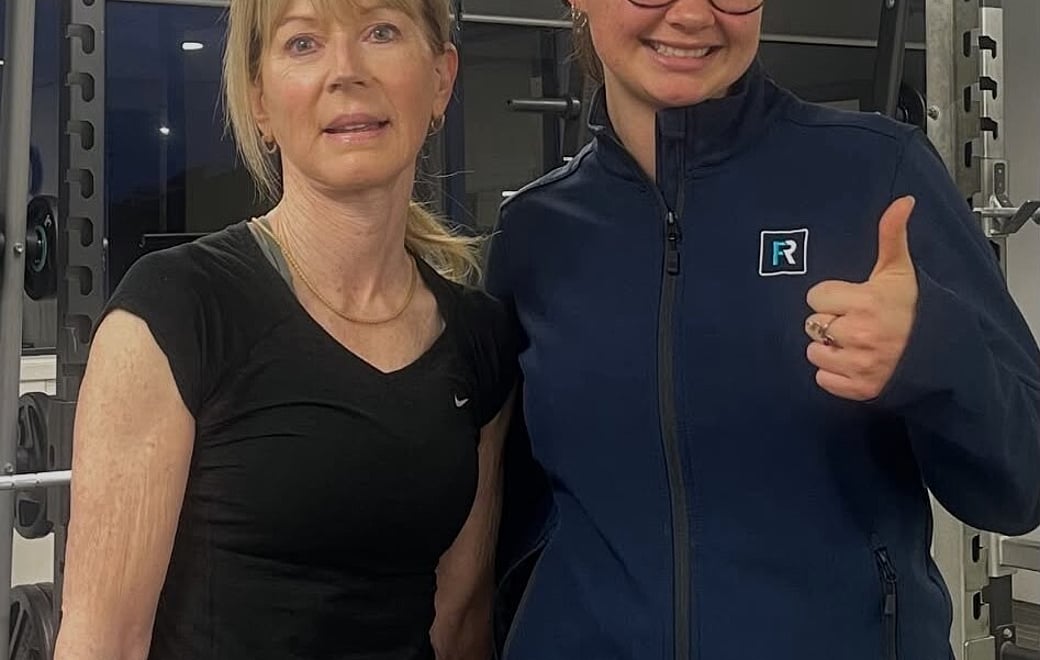
Week one, we find out where you actually are. A conversation about the surgery, what you have been cleared to do, what still does not feel right, and what your week realistically allows. Then a movement assessment, with particular attention to the operated side and how it compares to the other one.
Weeks two and three, you learn the movements. Light loads and a lot of coaching. For most people this is the first time anyone has taught them to load the repaired area properly rather than protect it.
Week four, we start adding load. By now the pattern is familiar and sessions get progressively harder in a way you can feel but sustain.
You will be matched with one trainer who works with you consistently. Sessions run 30 minutes, one-on-one, two-on-one, or online.
Who you will be working with
All our trainers hold Cert IV and Cert V in Fitness or an exercise science degree, and complete our own internal training and assessment before working with any client. You will be matched with one trainer rather than passed around, which matters more than usual here. The person coaching you needs to know what was operated on and what it could do last month.
What it costs
Personal training starts from $75 per session, and two-on-one from $95. New clients also pay a one-off $199 starter fee, which covers your first programming session with your trainer plus two sessions with our nutritionist.
Your package includes access to all four studios, all group fitness classes, a complete training plan and nutritional support.
Full detail is on our pricing page.
Our guarantee
Follow your programme completely for the first eight weeks and if you do not achieve the results we agreed on, we will refund your money and give you $500 for your time.
Common questions
Do I need clearance from my surgeon or physiotherapist?
Yes. We will not start progressive loading until you have been discharged from physiotherapy or have been cleared for strength training. Bring whatever you have been told to your first consultation. If it is not clear, we would rather you go back and ask than guess.
How long after surgery can I start?
It depends on what was done, by whom, and how your recovery has gone, which is why the clearance question comes first. Shoulders generally run to a slower timeline than hips and knees. Most people reach us once physiotherapy has wrapped up, and some come a good deal later, having realised a year on that it never quite came right.
Is it too late if my surgery was years ago?
No. The strength deficit is trainable whether the operation was six months ago or six years ago. We have worked with people who assumed the way their body felt was simply permanent.
Will lifting weights damage the repair?
This is the most common worry and it is worth answering directly. Supervised, progressive resistance training after joint replacement is described as safe in the research, and after lumbar disc surgery the evidence found no substantial advantage in restricting activity. What we do is progressive and supervised, which is exactly the form that has been studied.
What if I have had more than one operation?
That is common and it does not change the approach. It changes the order we work in and how we manage your week.
Can I train before surgery while I am waiting?
Often yes, and it is worth doing. Going into an operation stronger tends to mean coming out of it better. Raewyn kept training right up to her hip surgery and was back training pain free six weeks afterwards. The same clearance rule applies.
I have never trained in a gym. Is that a problem?
No, and most people arriving here after an operation have not. Sessions are one-on-one or two-on-one, so there is nobody watching and nothing to keep up with.
Which studio should I go to?
Whichever is easiest to get to, which matters more than you would think when you are building a habit. We have studios in Epsom, Ponsonby, Takapuna and Remuera, and your package covers all four.
The research behind this page
Petterson SC and colleagues. Improved function from progressive strengthening interventions after total knee arthroplasty: a randomized clinical trial with an imbedded prospective cohort. Arthritis and Rheumatism, 2009.
Stevens-Lapsley JE and colleagues. Early neuromuscular electrical stimulation to improve quadriceps muscle strength after total knee arthroplasty. Physical Therapy, 2012.
Bull T and colleagues. Hypertrophy training following a total hip replacement: a literature review. International Journal of Sports Physical Therapy, 2024.
Sachinis NP and colleagues. Can we accelerate rehabilitation following reverse shoulder arthroplasty? A systematic review. Shoulder and Elbow, 2024.
Brotis AG and colleagues. Physical therapies after surgery for lumbar disc herniation: evidence synthesis from 55 randomized controlled trials and a total of 4,311 patients. Brain and Spine, 2025.
Written by Dean Williams, Founder & CEO, The Right Fit Personal Training. Cert IV and Cert V in Fitness, Master of Fitness Business (Max Fitness College). Australian Personal Trainer of the Year 2011, NSW Young Entrepreneur of the Year 2014. Last reviewed November 2026.
This page is general information, not medical advice. Talk to your GP before starting a new exercise programme if you have a health condition.

Health and Fitness for Busy Professionals
Contact Us
Studio Locations
Epsom
303 Manukau Road, Epsom 1023
Ponsonby
4 Newton Road, Grey Lynn 1010
Takapuna
17 Huron Street, Takapuna 0622
Remuera
333 Remuera Road, Remuera 1050

